Camino de Santiago
Camino means “trail”, “way”, “path,” or “journey”. In English, you might hear The Way of St. James, or in French, Le Chemin de St Jacques. The word Santiago is a combination of “Sant” and “Yago,” the ancient word for James. The Camino refers to any of a number of routes that pilgrims take towards Santiago de Compostela. The most popular route, the French Way, hosts roughly 70% of pilgrims. The Portuguese Way is the second most popular route and is travelled by just over 13% of pilgrims. Whether arriving from France, Spain, or Portugal, there are any number of sub-routes and starting points a pilgrim can choose from.
History
The pilgrimage to Santiago de Compostela started in the ninth century. James, one of the twelve apostles, is the patron saint of Spain and was said to have preached in Iberia. According to Christian legend, in 813 AD a hermit named Pelayo saw a light in a field of stars “Campo Stella” that led him to the grave of St. James. The bishop authenticated the relics and King Alfonso II built a chapel to the saint.
Things then coincidentally heated up politically as the Christian-Muslim forces did battle, each with competing apparitions and relics. The pilgrimage to visit the remains of St James reached a peak in the 11th and 12th centuries when as many as 1,000 pilgrims a day made their way to Santiago de Compostela from all over Europe.
Many churches and monasteries provided shelter to pilgrims and this tradition continues today. There is an extensive series of municipal, parochial and private albergues or hostels along the Way that offer inexpensive and rustic accommodation.
The Camino Frances (The French Route)
The highly travelled French Route is named because many pilgrims begin the journey in St Jean Pied-de-Port. As seen in the map below, a more logical name might have been the “One Day in France and the Rest in the North of Spain” route, but that would have been too hard to remember I imagine.
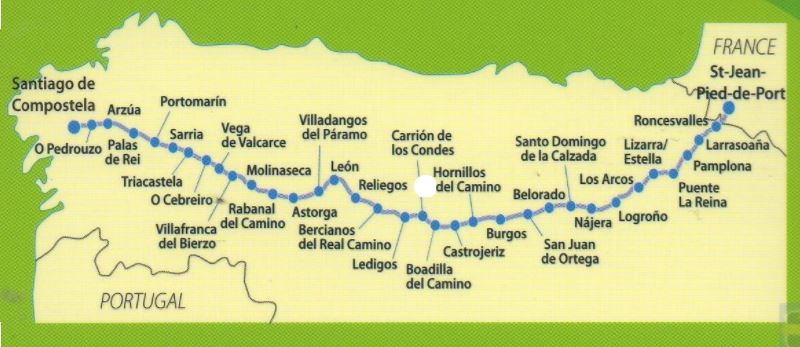
The typical French route is 500 miles or 800 kilometers long and takes on the order of 33 days to complete, depending on the traveler and the number of rest days. Many do the journey in a series of shorter treks, one to two weeks at a time.
The Caminho Português (The Portuguese Route)
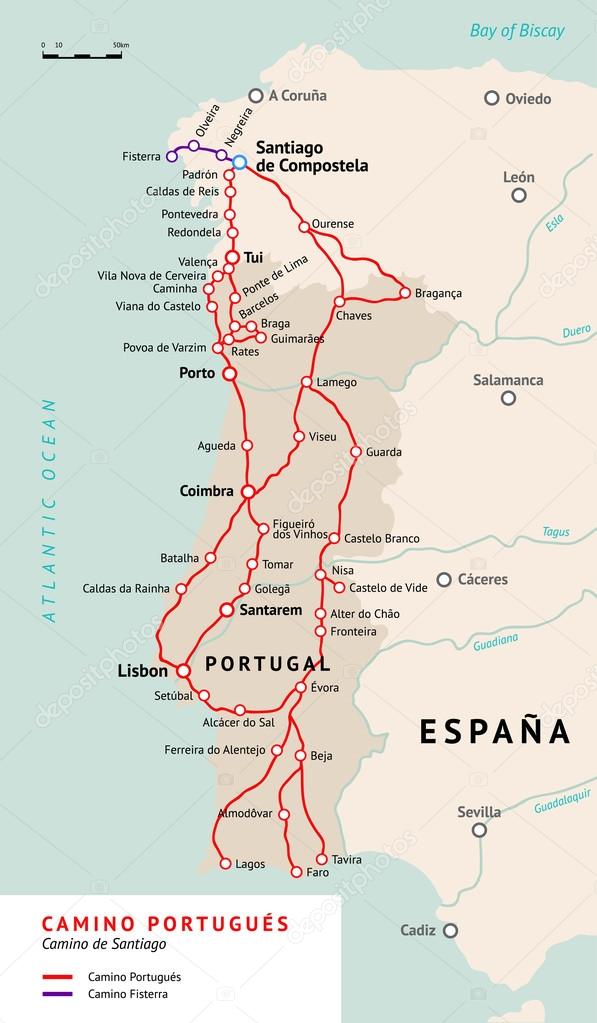
The Portuguese Route is roughly 400 miles from Lisbon to Santiago depending on the specific routes chosen. Many travelers begin walking in Porto. There are various routes that pilgrims can take on their journey north including the Coastal, Central, and Litoral options.
 Hacking the Camino